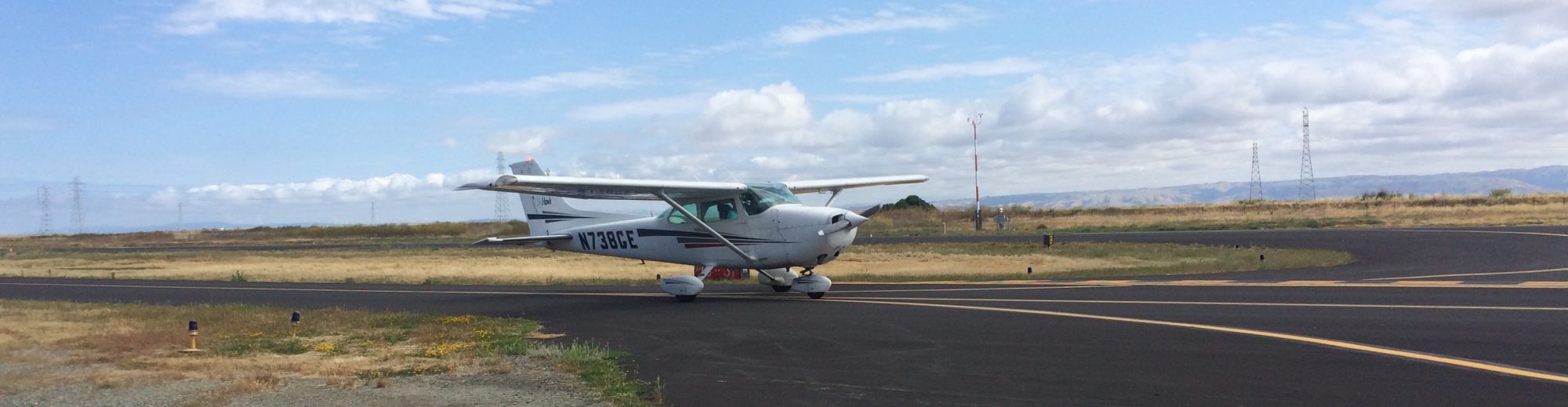
The plan for today’s lesson was a flight to Half Moon Bay (KHAF) for pattern work and to do a refresher on stalls over the west ridge. My CFI and I met at the airport around 0900, I performed the pre-flight (which included mounting a GoPro this time) and then we called for taxi. This morning was a typical, busy Saturday morning at PAO. Taxiing to 31 via the terminal side, we were slotted as number four to enter the run-up, which meant we were number seven for departure. 15 minutes on the ground and we were finally able to pull-up and hold short—next to go!
We flew a Left Dumbarton departure, getting several different aircraft “in sight” that the tower controller was kind enough to call out for us (thanks Erik.) Tracking toward the Crystal Springs Reservoir, my CFI briefed me on the procedures for flying into and out of an uncontrolled airport and the proper way to identify yourself on the Common Traffic Advisory Frequency (CTAF.) We picked up the weather (33008KT) over the radio, then made our first call: “Half Moon Bay Traffic, Skyhawk 733ZK crossing the ridge now inbound for right traffic, Half Moon Bay.” The direction we were flying set us up best for a straight-in for right base entry to runway 30, but this is not the safest or best practice for entering an uncontrolled airport environment. My CFI told me to keep an altitude at least 500 feet above the pattern and fly directly for midfield. Overhead the airport, I made another call indicating that I was now flying outbound to enter on the right-45 for runway 30.
Each approach was strikingly similar to landing at PAO. The right traffic turns are always a little more of a challenge as the runway is on the far said of the aircraft from me, but each time I seemed to have plenty of time to stabilize my approach and bring it in for a decent landing. Check out the video below to follow-along through from the base turn all the way to exiting at taxiway bravo.
After pattern work, we departed via an overhead left-270 back for PAO. For the stall refresher, we made a clearing turn over SLAC and started with slow-flight and power-off stalls. I did a pretty decent job keeping within the standard margins and wasn’t nearly as started by the recovery as I was the first time we practiced. Power-on stalls, however, still made me a little uneasy. We called PAO from the south when we were about finished practicing. I figured we would have a delay coming back into the pattern as the tower controller was working their booty off to keep up with the volume. Sure enough: “Cessna 733ZK, Palo Alto Tower, hold over the dish, I’ll call you back.” Thanks Eric—I really appreciate your help 🙂
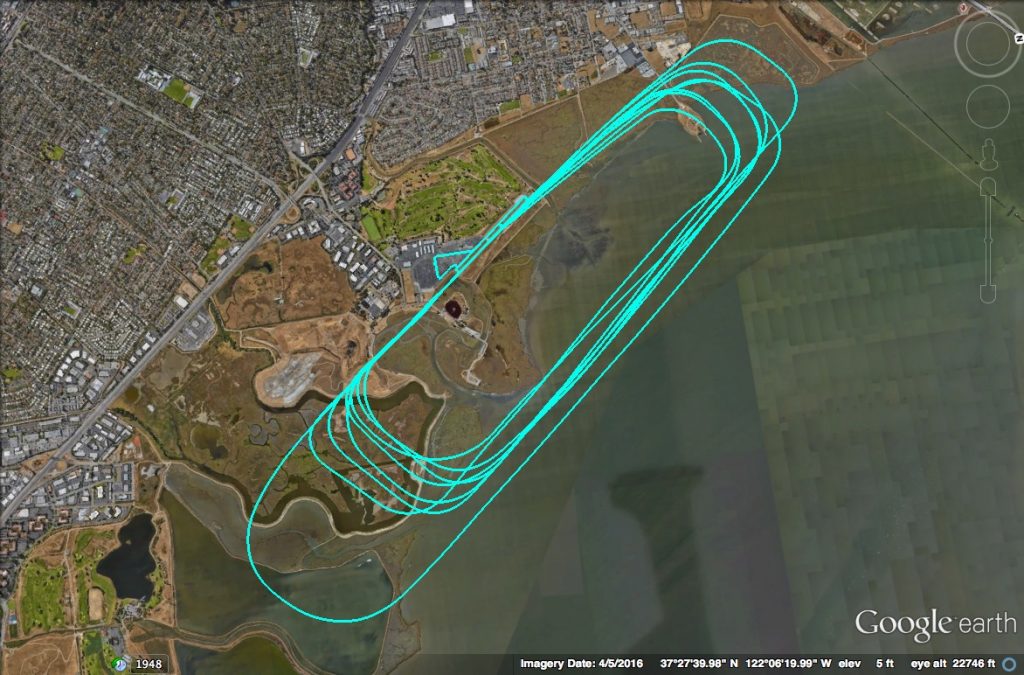
We used the holding time wisely and did a quick refresher on turns around a point. About 10 minutes later, we were called to make left-traffic toward runway 31. Upon entering the pattern, I was told my number in line. I was seventh to land and began anticipating to at least extend as far as Hangar One at NUQ before turning base. I was correct. And even was asked to make a right-270 back to base to build some space for a departure. Busy morning for departure… Busy afternoon for landing. Saturday at PAO!
Today was great. Thanks to the departure and arrival delays, I totaled up another 2.0 hours in the logbook. Planning to fly at least two more times before my Europe trip with all hopes of perfecting my landings and being ready to solo not long after returning to the States.